Our ‘25-‘26 Public Voices Fellowship cohort includes 22 scholars from across the university.
 Helena Addison PhD, MSN is a postdoctoral fellow in the National Clinician Scholars Program at Yale University and the West Haven, VA. Her research interests include examining how incarceration, violence, and additional trauma exposures affect mental health, as well as the role of nurse-led interventionsandmulti-sector collaborations in increasingaccess to care. She earned her PhD in Nursing Science from the University of Pennsylvania School of Nursing with her dissertation titled, “Mental Health and Health-Seeking Behaviors of Formerly Incarcerated Black Men.” She also earned her bachelor’s degree in psychology at University of Maryland Baltimore County and her MSN through the Master’s Entry into Nursing Program at Johns Hopkins School of Nursing. Her research interests were, in part, informed by her clinical experiences as a Registered Nurse in inpatient psychiatric hospitals caring for adults with mental illness and substance use disorder who, too often, have experienced incarceration. Her most recent work focuses on mental health and treatment engagement in veterans with criminal legal involvement. Her overall career goal is to engage in innovative and interdisciplinary research that informs policies and practices to improve mental health and quality of life for all people.
OpEds: “Why Nursing Science deserves more recognition” (Medscape)
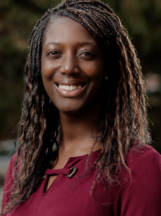 Aba Black, MD, MHS, received her bachelor’s degree from Princeton University and went on to earn her M.D. degree at the University of Rochester School of Medicine. She completed her residency at the Yale Primary Care Internal Medicine Program, where she was selected as chief resident. She subsequently earned an MHS degree in medical education. She is now an Associate Professor at Yale School of Medicine, where she serves as Vice Chief for DEI for General Internal Medicine and Associate Program Director for the Yale Primary Care program. Her academic interests focus on enhancing workplace equity and belonging. She leads initiatives related to underrepresented in medicine recruitment and retention, as well as trainee and faculty development. Clinically, she works as a primary care physician for underserved patients. Outside of the hospital, she serves on the board of Project Access-New Haven, an organization dedicated to improving access to medical care and services for underserved patients in the Greater New Haven area. She has received multiple teaching awards and was recognized with the CT American College of Physicians Diversity, Equity, and Inclusion Award for promoting physician diversity and inclusion with outstanding achievements in mentoring, leadership development, and role modeling.
OpEds: “Why DEI is good medicine for training doctors” (Baptist News)

Simone Blaser, MD is a post-doctoral fellow and Clinical Instructor at Yale. Her research in the Iwasaki laboratory explores oral host-microbe interactions in Long COVID. She completed internal medicine residency at New York University and infectious diseases fellowship at Yale. Prior to becoming a physician, she worked in book publishing, where she was involved in developing the #1 New York Times bestseller When Breath Becomes Air with the late Dr. Paul Kalanithi. She co-founded and led Rat Court reading series for nearly a decade in New York; notable alumni include cartoonist and author Liana Fink, New Yorker critics Alexandra Schwartz and Naomi Fry, comedian/actor Jacqueline Novak, and New York editor Choire Sicha. Her narrative medicine prose has been published in Clinical Infectious Diseases, Intima, and Clinical Correlations; and will be included in the upcoming anthology Where It Hurts: Dispatches from the Emotional Frontlines of Medicine, out in 2026. Her poetry is included in a collection on New York City haiku published by The New York Times and Rizzoli.
OpEds: “MAHA Ignores First Rule of Medicine: Do No Harm” (The Opinion Pages); “The government shutdown is over, but repercussions for science persist” (The Opinion Pages)
Cara Borelli, DO is a core faculty member in addiction medicine at Yale
University School of Medicine, and her clinical work is on the Yale Addiction Medicine Consult Service (YAMCS). In this role, she works on an interdisciplinary team and precepts trainees who span the spectrum of medical training, including first-year medical students, medical students on the Yale Collaborative Behavioral Health and Addiction Medicine Program (CHAMP) pathway, nurse practitioner and physician assistant students, resident physicians, psychiatry fellows, and addiction medicine fellows. She trained in emergency medicine at UT Health San Antonio, in San Antonio, Texas, and she completed a fellowship in addiction medicine at Icahn School of Medicine in New York City, New York. She has been involved in podcasting for multiple channels, including JAMA, ACEP Now, and REBEL EM on topics in addiction medicine treatment, and she is the co-editor-in-chief of the Journal of Child and Adolescent Substance Use. She is interested in providing education to both medical professionals and the public on topics in addiction medicine.
OpEds: “My Patient Received Dangerous AI Medical Advice. Here’s The Simple Question I Wish All Doctors Would Ask.” (HuffPost); “When Addiction Treatment Is Involuntary” (The NY Times - Opinion Letters to the Editor)

Kristen Brennand, PhD is the Elizabeth Mears and House Jameson Professor of Psychiatry and Professor of Genetics at Yale School of Medicine. Her research combines expertise in genomic engineering, stem cells, and neuroscience to identify the mechanisms that underlie brain development, traits, and disease. Understanding the basic biology governing the complex interplay between genetic variants and the environment will springboard the development of novel, personalized approaches to improve health and prevent disease. Dr. Brennand’s work is funded by the National Institutes of Health, Department of Defense, Simons Foundation Autism Research Initiative, Brain and Behavior Research Foundation, Chan Zuckerberg Initiative, and New York Stem Cell Foundation. She is a member of the Royal Society of Canada, Brain and Behavior Research Foundation (BBRF) Scientific Council, American College of Neuropsychopharmacology (ACNP), and the Connecticut Academy of Science and Engineering. Dr. Brennand’s mission is to unravel the mysteries of the human genome within a collaborative, inclusive, and supportive training environment. As part of her commitment to mentoring the next generation of scientists, she co- directs the Yale School of Medicine Science Fellows Program.
OpEds: ”Vaccines dont cause autism. Here’s what does“ (The Opinion Pages)

Amber W. Childs, PhD is an award-winning, nationally renowned child and adolescent clinical expert, innovator, and transformational leader. As a licensed clinical psychologist, she brings nearly 15 years of deep experience improving equity, access, and mental health outcomes for youth through data-driven quality improvement and cutting-edge digital delivery. Dr. Childs is currently an Associate professor of psychiatry in the Yale School of Medicine and is a member of the medical staff at Yale New Haven Psychiatric Hospital (YNHPH). Dr. Childs is the co-founder and director of the Getting Reflexive in Our Work (GROW) initiative at Yale, cofounder of the Yale Measurement-Based Care Collaborative and founder of M-Select, a comprehensive digital mental health solution for youth. Her transformational leadership roles have included Director of Training for the Yale Doctoral Internship in Clinical and Community Psychology in the School of Medicine and Co-Director of the Division of Quality and Innovation within YNPHP, and Chief Clinical Officer at BeMe Health. Dr. Childs earned her PhD in clinical psychology from the University of Tennessee, Knoxville and completed a doctoral internship and post-doctoral residency at the Institute of Living/Hartford Hospital, where she specialized in child and adolescent services.
OpEds: ”Chatbots can’t replace therapists for teens, but AI can be useful in their treatment“ (Chicago Sun Times); ”I’m a Child Psychologist. But I Can’t Solve The Porblem that Made My Daughter Cry“ (HuffPost); “How teens can become responsible digital citizens” (Psychology Today).

Pratiti Deb, PhD is a postdoctoral researcher in the Department of
Physics, Yale University, and the Yale Quantum Institute Fellow, 2025. Her research is in the field of optomechanics, i.e. the study of how light couples to mechanical motion. Pratiti has a PhD in physics from the University of Chicago, where she studied optically addressable spins in molecules. She has a BA in physics with a minor in mathematics from Cornell University. She is invested in making her academic spaces, and the world at large, more inclusive and just.
OpEds:

Fatima El-Tayeb, MA, PhD is Professor of Ethnicity, Race & Migration and of Women’s, Gender, and Sexuality Studies at Yale University. She received an MA in American Studies and Modern European History and a PhD in History from the University of Hamburg, Germany. Her research interests include Black Europe, comparative diaspora studies, queer of color critique, critical Muslim studies, decolonial theory, transnational feminisms, visual culture studies, race and technology, and critical European studies. She is the author of three books and numerous articles on the interactions of race, gender, sexuality, religion and nation. Her publications seek to deconstruct structural racism in “colorblind” Europe and center strategies of resistance among racialized communities, especially those that politicize culture through an intersectional, queer practice. Her work has been translated into German, Spanish, Portuguese, Italian, and Danish. El-Tayeb is founder of the Digital Archive of Black Europe and co-director of the Intersectional Black European Studies project. Her ongoing research projects explore the intersecting legacies of colonialism, fascism, and socialism in Europe and the potential of on transformative archives both in theory and practice. In addition to her academic work, she co-wrote (with Angelina Maccarone) the Black lesbian screwball comedy Alles wird gut/Everything Will be Fine (1997) and is active in Black feminist, migrant, and queer of color organizations in Europe and the US.
OpEds: ”There is no insitutional neurality under fascism“ (Yale Daily News); ”Fascism, Yale, and the New Haven Black Panther Trials“ (Inner City News)

Marc Henry Estriplet, MD, MPH, is a post-doctoral fellow with
the Yale National Clinician Scholars Program. He completed his Internal Medicine residency at Mount Sinai Hospital in New York City and received his undergraduate and medical degrees from Rutgers University, followed by an Master of Public Health (MPH) in Health Policy and Management from the Columbia Mailman School of Public Health. Some of his previous work has focused on workforce diversity initiatives in medicine when at R-NJMS and serving as Northeast Chair of Medical Students for the American Association of Medical Colleges. During his MPH program, he analyzed large datasets to study the mental health impacts of social status across racial groups. He also contributed to improving the mobile clinic operations of a major provider of homeless healthcare in NYC and initiated health policy education among his residency peers. As a fellow, Dr. Estriplet’s research examines healthcare finance policy’s impact on cost, equity, and outcomes. He investigates the trends in Medicare’s privatization on care quality and cost and is exploring alternative healthcare financing models to promote equity while acknowledging the influence of political determinants on health inequities.
OpEds: ”Healthcare Workers - Urge Congress to Extend ACA Tax Cuts for Insured“ (The Opinion Pages)

Megan Evans, PhD, MS, is an Associate Research Scientist at the
Program for Recovery and Community Health in Yale University’s Department of Psychiatry. She has professional experience in social services with individuals with mental illnesses, intellectual disabilities, and children and families involved with the child welfare system; research experience in social and peer support; and lived experience of emotional distress and recovery. She received her PhD in Health Behavior from the University of North Carolina at Chapel Hill and her MS in Community and Behavioral Health from the University of Iowa. She has vast and varied experience in the mental health and recovery space, including extensive knowledge in peer support. Her current research program is focused on the role of integrating lived experience perspectives throughout mental healthcare, including measuring the effectiveness of mental health treatments on improving personally meaningful outcomes for people with serious mental illnesses. She is a faculty member of Yale’s Lived Experience Transformational Leadership Academy LET(s) Lead, and co- facilitates two lived experience learning collaboratives. Her research has resulted in numerous peer-reviewed publications as well as a recent book, Peer Support Services Reaching People with Schizophrenia: Considerations for Research and Practice.
OpEds: “Are We Collectively Numb Over Routine Violence?” (Psychology Today)

Dr. Sevde Felek Boyvat, MD is a newborn hospitalist and Instructor of Pediatrics at the Yale School of Medicine. She is also the medical director of the newborn nursery at the Bridgeport Hospital of the Yale New Haven Hospital system. She received her undergraduate degree in Biology from the University of Chicago (2013) and her medical degree from the West Virginia University, School of Medicine (2018). She completed her Pediatric residency training at the Children’s Hospital at Dartmouth (2021), where she also served as Chief resident. Dr. Felek Boyvat has an interest in newborn medicine, maternal mental health, narrative medicine, and creative writing.
OpEds: “The Doctor, the Patient, and the Artificial Consultant: A Conversation with ChatGPT” (The Opinion Pages); “The Loneliest Rooms on the Maternity Ward” (The Fulcrum).

Jacquelyne Gaddy, MD, MSc, MSCR is an Assistant Professor of Medicine in the division of Medical Oncology at Yale School of Medicine. She cares for patients in the Center for Gastrointestinal Cancers at Smilow Cancer Hospital and Yale Cancer Center. She is originally from Buffalo, NY and is a proud alumna of Spelman College. Prior to medical school she pursued a master’s degree in Cancer Sciences at Roswell Park Comprehensive Cancer Center. She received her medical degree from Loyola University Chicago Stritch School of Medicine and completed her residency at the University at Buffalo. She completed her medical oncology fellowship at the University of North Carolina where she also obtained a Master of Science in Clinical Research (MSCR). Dr. Gaddy’s scholarly focus is evaluating the intersection of health equity and inclusive excellence. She is the Center for GI Cancers Community Outreach and Engagement liaison along with core faculty for the center for Community Engagement and Health Equity. She is also core faculty for the
Hematology/Oncology Fellowship Program. She additionally serves as the Director for the Diversity Enhancement Program in Oncology along with having leadership roles within the American Society of Clinical Oncology which she has been a member of since 2012.
OpEds: “The Dangers of Dismantling DEI in Medicine” (KevinMD)

Morgan Goheen, MD, PhD’s focus combines infectious disease (ID) clinical care, translational research, and global health pursuits. Growing up in rural Hamilton, Montana had its advantages – among them, it was home to NIAID’s Rocky Mountain Laboratories. Proximity to this worldclass institution led to my early lab exposure and a sustained passion for ID research. I worked several years in a NIAID trachoma lab. At Princeton, I majored in Molecular Biology and worked in a herpesvirus lab. Beyond the lab, I also sought broader understanding of social and public health implications of ID spread through study abroad in Cape Town and a year-long Princeton in Africa fellowship at South Africa-based HIV prevention NGO mothers2mothers. I then joined UNC Chapel Hill’s MD/PhD program. My Microbiology and Immunology PhD investigated the cellular-level relationship between anemia, iron supplementation, and malaria susceptibility, and included >2 years conducting field research in rural Gambia. I subsequently joined Yale’s Internal Medicine residency, followed by ID fellowship. My postdoc project examines the role of long-acting human antimalarials on malaria parasite selection in the mosquito, with field research in Burkina Faso. I have enjoyed developing skills in vector-based research and clinical tropical medicine here and am excited to become an Instructor in the ID section.
OpEds: “I’m An Infectious Disease Doctor. Here’s What Happened When I Sat Next To A Vaccine Skeptic On A Plane” (HuffPost); “Dr. shortage has administration facing music of anti-vaccine noise” (USA Today)

Valentina Greco, PhD I was born in Palermo, Italy and pursued
an undergraduate degree in Molecular Biology at the University of Palermo, Italy (1996), where I had my first academic research experience (1995-1998). I did not get accepted into the Ph.D. program in Palermo and attempted applications abroad. Thus, I left Italy and got accepted by Suzanne Eaton at the EMBL/MPI-CBG Ph.D. program, Germany (1998-2002), where I fell in love with microscopy and the power of fruitfly to understand epithelial cell communication. I subsequently completed a post-doc training at the Rockefeller University (2003-2009), where I learned about the mammalian skin. In 2009, I was hired as an Assistant Professor in the Genetics department at Yale School of Medicine. I am currently the Carolyn Walch Slayman Professor of Genetics as well as the Co-chair of Status of Women in Medicine (SWIM) at the Yale School of Medicine. I am also a Howard Hughes Medical Institute (HHMI) Investigator, inducted into the American Association for Art and Sciences and President of the International Society for Stem Cell Research (ISSCR) roles and titles that can support me in my desire to be a force for larger public discourse.
OpEds: “How do we become the gatekeepers?” (The Fulcrum)
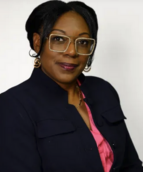
Randi R. McCray is a diversity, equity, inclusion, and belonging (DEIB)
strategist with over a decade of experience guiding institutions through cultural transformation. Her work focuses on embedding equity into organizational systems by addressing how identity, power, and bias shape workplace culture. Currently, she serves as Associate Director of DEIB at the Yale School of Public Health, where she leads initiatives that foster inclusive practices, support student and faculty development, and promote institutional accountability. With a background in counseling and human services, Randi brings a systems-level approach grounded in emotional intelligence and strategic vision. Her academic work explores how marginalized professionals—particularly women of color—navigate and transform institutions historically resistant to equity work. She is completing her Ph.D. in Social Justice and Public Policy at Union Institute and University. Randi has been recognized with the Elm-Ivy Award from Yale University and the Community Healer Award for her community impact.
OpEds: “Beyond Division: Choosing Compassion without losing accountability” (Common Dreams)

Malena Rice, PhD is a planetary astrophysicist and Assistant Professor in the Yale University Department of Astronomy. Her research centers on the formation and evolution of planetary systems, spanning topics including exoplanets, stars, and the outer solar system. She is known for her contributions to exoplanet orbital architecture characterization, inference of stellar properties using machine learning, understanding interstellar object origins, and the search for Planet Nine in the distant solar system. Dr. Rice received her B.A. degrees in Physics and Astrophysics at UC Berkeley before completing her Ph.D. in Astronomy at Yale University, for which she was awarded the IAU PhD Prize. Prior to joining Yale’s faculty, she spent one year at the MIT Kavli Institute as a Heising- Simons 51 Pegasi b Postdoctoral Fellow. Dr. Rice holds leadership roles in support of the NASA Transiting Exoplanet Survey Satellite (TESS) and Habitable Worlds Observatory (HWO) missions, and she is a steering committee member for NASA’s ExoExplorers program. She has authored over 85 academic publications, and she has been named as a National Geographic Explorer, a Scialog Fellow, a Rising Talent by the Women’s Forum for the Economy & Society, and a member of the Forbes 30 Under 30 list.
OpEds:

María Rodríguez Martínez, PhD is an Associate Professor in the Department of Biomedical Informatics and Data Science at Yale School of Medicine, with additional appointments in the Center for Systems and Engineering Immunology and the Wu Tsai Institute. Her research sits at the intersection of computational immunology and artificial intelligence, with a particular focus on interpretable deep learning models for immune receptor modeling and personalized cancer medicine. Her lab develops multimodal AI frameworks that leverage the adaptive immune system to design improved cancer immunotherapies. Before joining Yale in 2024, Dr. Rodríguez Martínez led the Computational Systems Biology group at IBM Research Europe (Switzerland), where she directed several large-scale initiatives, including the EU-funded PrECISE and iPC consortia to advance personalized therapies for prostate and pediatric cancers. Originally trained as an astrophysicist in Spain and France, she transitioned to systems biology through postdoctoral research at the Weizmann Institute of Science (Israel) and Columbia University (USA). She has authored over 100 peer-reviewed publications and is internationally recognized for her leadership in interpretable AI for biomedical research. She serves on multiple editorial boards and scientific advisory committees and is a committed mentor and strong advocate for open science and reproducibility.
OpEds: “Women’s Final Frontier: Ourselves” (Women’s E-News)

Gina Sissoko, PhD, is a licensed clinical psychologist and NIH-funded Postdoctoral Fellow at the Yale School of Public Health. Her work centers on the impact of colorism, gendered racism, and gender-based violence on Black women and girls’ mental and sexual health, as well as their criminal legal involvement. As a transnational scholar, her research spans the U.S., Europe, and the African continent to elevate the often-overlooked narratives of global Black communities. Dr. Sissoko has published in leading journals, including American Psychologist and the American Journal of Public Health, and has received funding from the National Academies of Sciences, Engineering, and Medicine, the Ford Foundation, and the National Science Foundation. Clinically, she has served marginalized populations across the lifespan in forensic, psychiatric, and community-based settings. Born and raised in Hamburg, Germany, to West African immigrant parents, she brings a multilingual, global lens to psychology and public health. She speaks German, English, and French fluently, and is conversational in Bambara. Through research, clinical work, and public engagement, Dr. Sissoko bridges psychology, public health, and critical theory to transform narratives and advance culturally responsive mental health care for Black communities worldwide.
OpEds: “Hair Esteem, a Missing Piece in Mental Health” (Psychology Today); “Strong but at what cost? What Gucci Mane’s wife teaches us about caregiving and strong Black women” (The Amsterdam News)

Shannon F.R. Small, MD, is a surgeon who specializes in trauma, emergency surgery, and critical care. Dr. Small treats a wide range of cases. She also manages critical care patients in the intensive care unit (ICU) and performs elective surgeries. She says she was drawn to her specialty because of its variety. “My practice is constantly evolving, which is exciting. I’ve recently incorporated robotic surgery into my practice, which has reinvigorated my work.” One of the most rewarding aspects of her job, she says, is offering support to patients and families during difficult times. “I follow the golden rule: treat others how you would want to be treated. This principle guides my practice and ensures I provide compassionate and equitable care,” she says. “I strive to ensure that all patients receive care that I would want for my own family. This mindset informs my practice and drives my commitment to patient care.” Additionally, Dr. Small says she enjoys serving as a mentor to future generations of surgeons. She is a strong proponent of inclusive excellence and ensuring that all people have access to the health care they need. Dr. Small’s research is focused on patient outcomes and access to care.
OpEds: “How do we atone: Reflections on Faith” (The Fulcrum); “Who gets to apologize?” (Baptist News)

Nina Stachenfeld, PhD is a Senior Research Scientist at the Yale School of Medicine (YSM) in the Department of Obstetrics, Gynecology and Reproductive Sciences where she has dedicated her career to the study of how reproductive hormones impact the vascular system and the control of blood pressure in women. She received her Doctorate in Applied Physiology from Columbia University. Dr. Stachenfeld completed her post-doctoral training in environmental physiology at the John B. Pierce Laboratory and YSM. Her current NIH funded research focuses on the impact of estrogen and estrogen lowering treatments on vascular function in women with endometriosis. She is also studying the potential for artificial intelligence to improve diagnosis of endometriosis. Dr. Stachenfeld co-chaired and continues to serve on Committee on the Status of Women in Medicine whose primary mission includes an improved working environment for women at YSM. She is also the current chair of Women Faculty Forum. She is currently collaborating with the Ludeman Family Center for Women’s Health Research (University of Colorado Anschutz Medical Campus) on a curriculum to teach sex differences and sex and biological variable in biological research. Dr. Stachenfeld is plans to use the skills she will learn as a Public Voices Fellow to better communicate challenges faced in women’s health and women’s health research.
OpEds: “What if we took endometriosis as seriously as we take diabetes?” (Women’s E-News); “So DEI doesn’t work. OK, what would be better?” (The Fulcrum)

Tushara Surapaneni, MD is an emergency medicine physician and global health researcher, with a focus on how climate change impacts healthcare, particularly in underserved areas. She is a Clinical Instructor and Global Health & International Emergency Medicine Fellow in the Yale Department of Emergency Medicine. She completed her undergraduate studies in International Relations at SUNY Geneseo and her medical degree at Albert Einstein College of Medicine. During her fellowship, she is pursuing a Master of Science in Epidemiology at the London School of Hygiene and Tropical Medicine. Her research focuses on equitable access to care, using visualization tools like geographic information systems to provide actionable insights for health systems improvement. She also has experience in storytelling, having worked as a podcast director and recording facilitator, and aspires to leverage these skills to bridge the gap between scientific research and public understanding.
OpEds: “The world must not ignore Israel’s attacks on Gaza’s hospitals” (Project Syndicate)

Wei Zhang, MBBS, PhD received her medical and research training in China and Japan, with a strong focus on cardiovascular medicine and vascular surgery. Intrigued by the practical applications of tissue engineering, she came to Yale School of Medicine to develop next generation vascular conduits and improve the blood compatibility of existing endovascular devices. Her work bridges engineering and medicine, aiming to translate innovations from bench to bedside. She is currently developing novel animal models and optimizing vascular graft performance, supported by the IMRF Foundation in New York. Her research includes the design of individualized grafts for patients with connective tissue diseases. Driven by a passion for global health, Dr. Zhang also focus on affordable, off-the-shelf vascular devices suitable for usage in resource-limited area. Fascinated by the surgical craft and its real-world impact, she is committed to advancing practical solutions for cardiovascular care. She believes science and health must be accessible to the public and is dedicated to promoting health literacy around emerging cardiovascular technologies. Dr. Zhang is passionate about empowering individuals to take control of their cardiovascular health through greater understanding of modern medical advancements.
OpEds: “Is America Still Welcoming Global Talent?” (The Fulcrum); “The Hidden Cost of Vascular Disease” (Women’s E-News)

.png)